



Radiographic Testing (RT): Detecting Internal Flaws Through Penetrating Radiation
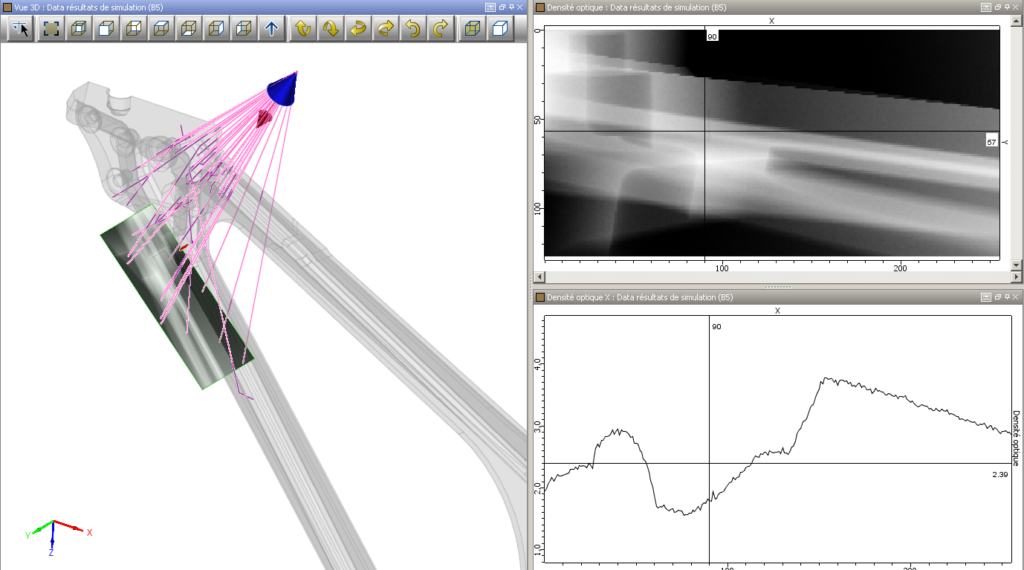
Radiographic testing is anon-destructive testing of components and assemblies that is based on differential absorption of penetrating radiation- either electromagnetic radiation of very short wave-lengths or particulate radiation by the part or test piece being tested. Because of differences in density and variations in thickness of the part, or differences in absorption characteristics caused by variation in composition, different portions of a test piece absorb different amounts of penetrating radiation. Unabsorbed radiation passing through the part can be recorded on film or photosensitive paper, viewed on a florescent screen or monitored by various types of electronic radiation detectors.
The term radiography testing usually implies a radiographic process that produces a permanent image on film or paper. Although in a broad sense it refers to all forms of radiographic testing. Neutron radiography refers to radiographic testing using a stream of neutrons rather than electromagnetic radiation.
Industrial Radiography inspection is used to detect features of a component or assembly that exhibit a difference in thickness or physical density as compared to surrounding material. Large differences are more easily detected than small ones. In general, radiography can detect only those features that have an appreciable thickness in direction parallel to the radiation beam. This means that the ability of the process to detect planar discontinuities such as cracks depends on proper orientation of the test piece during testing. Discontinuities such as voids and inclusions, which have measurable thickness in all directions, can be detected as long as they are not too small in relation to section thickness. In general, features that exhibit a 2% or more difference in absorption compared to the surrounding material can be detected. Radiography is more effective when the flaws are not planar.
Radiographic testing is used extensively on castings and weldments. Radiography is well suited to the testing of semiconductor devices for cracks, broken wires, unsoldered connections, foreign material and misplaced components.
Sensitivity of radiography to various types of flaws depends on many factors, including type of material, type of flaw and product form.
Both ferrous alloys can be radio graphed, as can non-metallic materials and composites.
● Compared to other NDT methods, radiography is expensive. Relatively large capital costs and apace allocations are required for a radiographic laboratory
● Field testing of thick sections is a time consuming process. High activity sources require heavy shielding for protection of personnel
● Tight cracks in thick sections usually cannot be detected at all, even when properly oriented
● Laminations are impossible to detect with radiography, because of their unfavorable orientation
● Laminations do not yield differences in absorption that enable laminated areas to be distinguished from limitation free areas
● It is well known that large doses of X-rays or gamma rays can damage skin and blood cells, can produce blindness and sterility, and in massive doses can cause severe disability or death
● Protection of personnel not only those engaged in radiographic work but also those in the vicinity or radiographic testing is of major importance
● Safety requirements impose both economic and operational constraints on the use of radiography for testing
● Minute discontinuities such as inclusions in wrought material, flakes, micro- porosity and micro-fissures cannot be detected unless they are sufficiently segregated to yield a detectable gross effect
At InspecNDT, we provide advanced radiographic testing (RT) solutions to help you inspect components with precision and maintain the highest quality standards.
Industrial radiography detects thickness or density differences in materials, with larger variations being easier to identify. Planar cracks require proper orientation, while voids and inclusions are detectable if they have measurable thickness. Features with a 2% or more absorption difference can be identified, making radiography more effective for non-planar flaws.
Radiographic testing is a non-destructive method used to detect internal defects in castings, weldments, and semiconductor devices. It identifies cracks, broken wires, and misplaced components. Sensitivity depends on material type, defect nature, and product form. This technique applies to metals, composites, and non-metallic materials.
Detects internal defects, such as cracks, voids, and inclusions with cutting-edge radiographic technology.
Effective for detecting flaws in castings, weldments, and critical components like semiconductors.
A reliable and affordable non-destructive testing solution for superior quality control, despite higher capital costs.
RT detects internal defects such as cracks, voids, inclusions, and differences in material density or thickness.
RT works on metals, composites, and non-metallic materials, commonly used in castings, weldments, and semiconductor devices.
RT uses penetrating radiation (X-rays or gamma rays) to pass through materials, revealing flaws based on variations in density or thickness.
Limitations include high cost, long testing time for thick sections, radiation safety concerns, and inability to detect tight cracks or laminations.
Sensitivity depends on material type, defect nature, and structure, with RT being more effective at detecting significant absorption differences.
RT can be performed on-site, but field testing, especially for thick sections, may take longer and requires radiation safety precautions.
Our range of services
Our range of services