Visual Testing (VT) or Visual Inspection
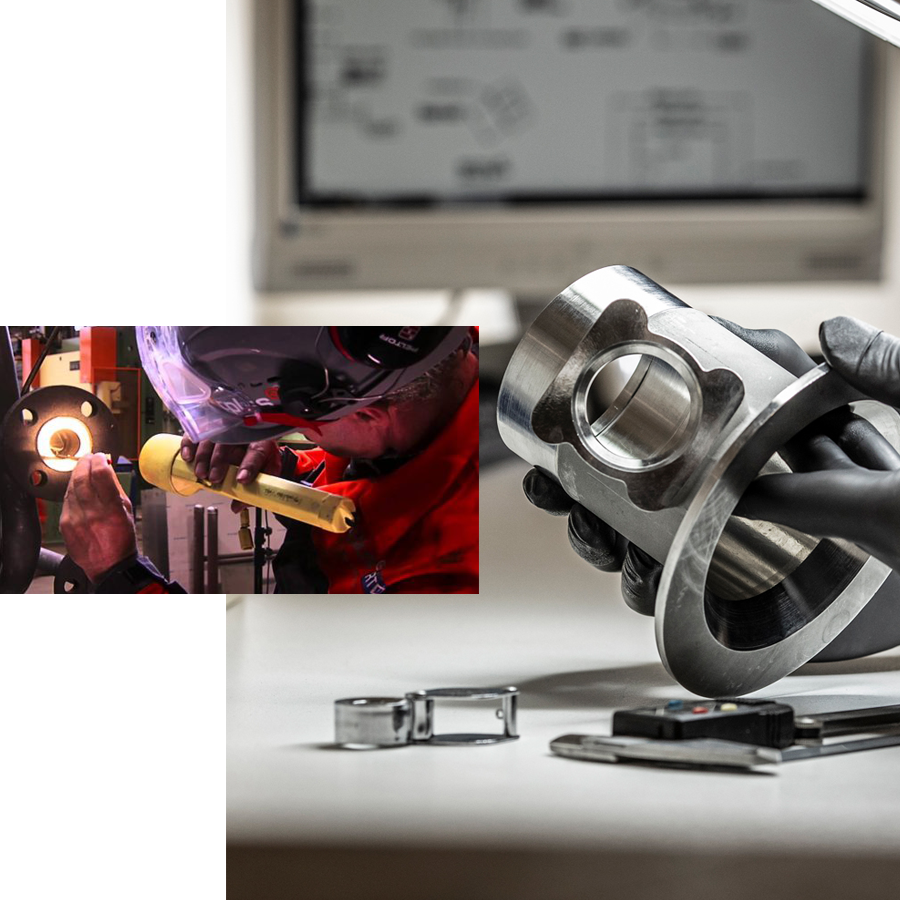
Visual Testing (VT) is a widely used non-destructive testing (NDT) method for detecting surface defects in materials. It involves a direct or indirect visual examination of a component to identify discontinuities such as cracks, corrosion, misalignment, and other irregularities. This method is one of the simplest, fastest, and most cost-effective techniques used across various industries.
VT can be performed with the naked eye or enhanced with tools like magnifying glasses, borescopes, mirrors, and cameras. Advanced techniques use digital imaging and computerized analysis for more precise inspections.
- Detects surface flaws such as cracks, corrosion, welding defects, and misalignments.
- Requires minimal equipment and is cost-effective compared to other NDT methods.
- Can be used on a wide range of materials, including metals, plastics, composites, and ceramics.
- Suitable for both large-scale and detailed inspections.
- Can be performed in real-time during manufacturing or maintenance.
Limitations

Visual Testing Process
Visual Testing is widely used in industries like aerospace, automotive, construction, and manufacturing due to its efficiency and simplicity. The process typically involves the following steps:
01
Surface Preparation
The test surface is cleaned to remove dirt, oil, and debris that may obscure defects or interfere with accurate inspection.
02
Direct or Indirect Examination
The surface is visually inspected either with the naked eye or using aids such as magnifiers, mirrors, or cameras for enhanced detection.
03
Lighting and Contrast Adjustment
Proper lighting conditions, such as natural light, artificial lighting, or UV light, are adjusted to improve visibility and contrast for accurate defect identification.
04
Measurement and Documentation
Any observed defects are measured and recorded for analysis. Advanced techniques may use digital imaging and software for detailed assessments.
05
Reporting and Analysis
Inspection results are compiled into a report, including descriptions of defects, locations, and recommended corrective actions.
Why Choose Us for Visual Testing?
- Identifies surface flaws like cracks, corrosion, and misalignment.
- Simple, affordable, and efficient inspection method.
- Borescopes, magnifiers, and digital imaging for enhanced analysis.
- No complex machinery, reducing overall inspection costs.
- Suitable for metals, plastics, composites, and welds.
- Follows international NDT guidelines.
- Skilled professionals ensuring accurate assessments.
1
Surface Preparation
Ensuring clean surfaces for clear defect visibility.
2
Direct or Enhanced Inspection
Naked eye or magnification-based examination.
3
Detailed Reporting & Analysis
Documenting findings for quality control and corrective action.
VT can detect surface discontinuities such as:
✅ Cracks and fractures
✅ Corrosion and pitting
✅ Misalignment and warping
✅ Weld defects and discontinuities
✅ Coating imperfections
1️⃣ Surface Preparation – Cleaning the surface to ensure defect visibility.
2️⃣ Direct or Enhanced Inspection – Observing with the naked eye or using optical aids.
3️⃣ Lighting and Angle Adjustments – Ensuring proper illumination for better detection.
4️⃣ Documentation & Reporting – Recording observations for quality control and corrective actions.
VT can be performed using:
✔️ Borescopes & fiberscopes
✔️ Magnifying glasses & microscopes
✔️ Flashlights & UV lights
✔️ Cameras & digital imaging systems
VT is widely used in:
🔹 Aerospace
🔹 Automotive
🔹 Construction
🔹 Manufacturing
🔹 Oil & Gas


